
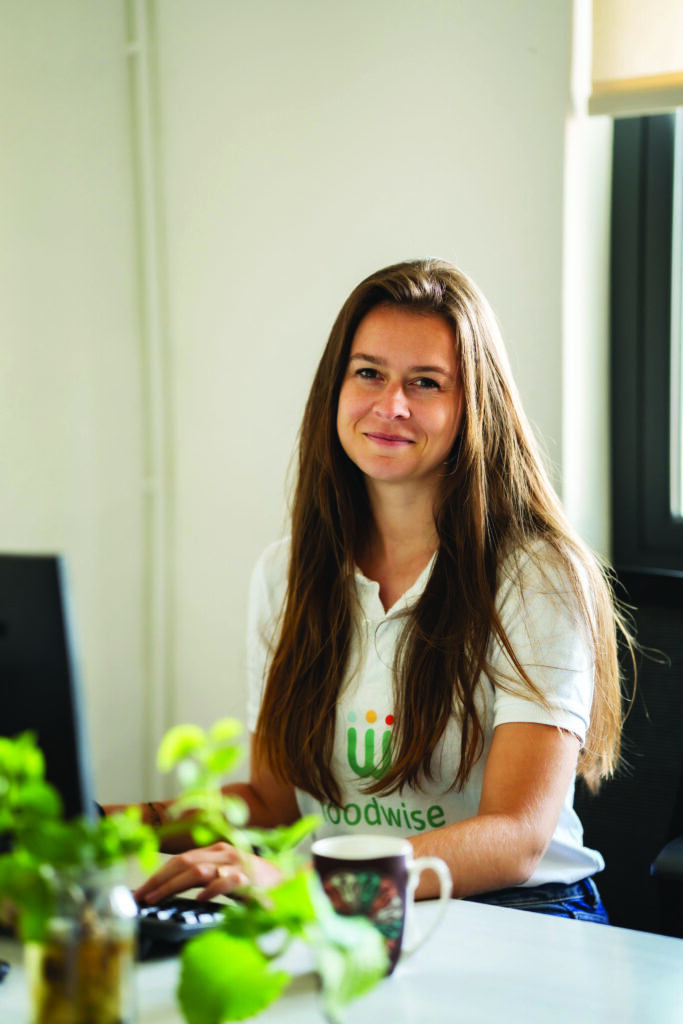
Since 2018, FoodWise has been tackling the problem of food insecurity with determination. The NGO not only fights food waste by redistributing surplus, unsold and short-dated produce, but also sets up numerous projects to empower vulnerable people. Its latest, ground-breaking study sheds light on the precarious situation of some of our compatriots. Lotilde Charpy, General Manager of FoodWise, tells us more. Eugénie Sauzier-de Rosnay
Tell us about your latest study.
We collaborated with Analysis Kantar to carry out a four-month study of the southern region of the island, from Mahébourg to La Gaulette, covering 260,000 inhabitants. The study combined a quantitative analysis with a sociological approach, including ethnographic interviews and analysis of national statistical data. Historically, FoodWise has focused its efforts on this particularly poverty-stricken area. Although we are present throughout the island, this landlocked area faces socio-economic challenges that we wanted to explore in greater depth with this study.
What came out of this exercise?
The results are worrying. Around 22,000 people are living in food insecurity in the south. The study reveals irregular eating habits and unstable purchasing power, with day-to-day difficulties despite great resourcefulness. Food insecurity not only causes nutritional deficiencies, but also affects people’s mental and social health, leading to other health problems (diabetes, dermatological disorders, etc.) and impacting on children’s professional integration and success at school.
In what way do the accounts we gathered nuance the usual perception of food insecurity in Mauritius?
They revealed that it takes a variety of forms. Some families eat just one meal a day, while others manage to provide three meals, albeit often poorly balanced. Even so, the situation remains unstable and precarious. These stories show that food insecurity is not a uniform reality, and that the challenges faced by these families are often invisible, or poorly understood.
How do you assess the effectiveness of your actions?
We closely monitor their impact throughout the year, working closely with our NGO partners. This in-depth study has also enabled us to better assess the situation, thanks to feedback from the NGOs and experts who were consulted during the survey. The information gathered from different points of view enabled us to draw up a more accurate picture of the situation in the south, and to consolidate our approach to meeting families’ needs.
What do you do to help beneficiaries achieve long-term autonomy?
Awareness-raising and training are essential pillars of our long-term actions. We believe it’s crucial to start at an early age to instill good eating habits and raise awareness of the impact of food waste. Our programs aim to teach balanced eating habits, even in situations of limited resources, in order to promote better nutrition and encourage sustainable habits.
What is your message to private-sector players and companies?
We call on our partners, particularly in the agri-food sector, to strengthen the chain of solidarity and continue to make donations. It’s crucial not to waste surplus food, but rather to redistribute it. We are also looking for new financial partners for 2026, so that we can continue our mission of collection and redistribution, and help the most vulnerable families to feed themselves with dignity.
FoodWise in figures (as of November 2018)
- 7,259,079 meals distributed
- 1,817,944 kg of shared food
- 225 recipient NGOs
- 4,544,872 kg of CO2 saved
FoodWise
Solidarity and Sustainability!
Since 2018, FoodWise has been tackling food insecurity head-on. The determined NGO not only fights food waste by redistributing surplus, unsold items and short-dated products, but also implements numerous projects to empower vulnerable individuals. Its latest groundbreaking study sheds light on the precarious situation facing some of our fellow citizens. Lotilde Charpy, General Manager of FoodWise, tells us more.
You launched an unprecedented study in 2025. Could you tell us more?
We collaborated with Analysis Kantar to conduct a four-month study on the island’s southern region, from Mahébourg to La Gaulette, covering 260,000 inhabitants. It combined quantitative analysis with a sociological approach, including ethnographic interviews and national statistical data analysis. Historically, FoodWise has concentrated its efforts on this area, which is particularly affected by poverty. Whilst we operate across the entire island, we wanted to examine more closely the socio-economic challenges facing this isolated zone.
What emerged from this exercise?
The results are concerning. Approximately 22,000 people live with food insecurity in the south. The study reveals irregular eating habits and unstable purchasing power, with daily difficulties despite considerable resourcefulness. Food insecurity not only causes nutritional deficiencies but also affects mental and social health, leading to other health problems (diabetes, dermatological disorders…) and impacting professional integration and children’s academic success.
How do the collected accounts nuance the usual perception of food insecurity in Mauritius?
The study revealed that it takes varied forms. Some families eat only one meal a day, whilst others manage three meals, though often poorly balanced. Even in these cases, the situation remains unstable and precarious. These accounts show that food insecurity is not uniform, and the challenges faced by these families are often invisible or misunderstood.
How do you evaluate the effectiveness of your actions?
We closely monitor their impact throughout the year by working closely with our partner NGOs. This in-depth study has also enabled better evaluation, thanks to feedback from NGOs and experts consulted during the survey. Information gathered from different perspectives has allowed us to establish a more precise assessment of the situation in the south and consolidate our approach.
What is your message to private sector actors and businesses?
We call on our partners, particularly in the food industry, to strengthen the solidarity chain and continue donating. It’s crucial not to waste food surplus but rather redistribute it. We’re also seeking new financial partners for 2026 to continue our mission.
FoodWise in figures (since November 2018)
- 7,259,079 meals distributed
- 1,817,944 kg of food shared
- 225 receiving NGOs
- 4,544,872 kg of CO₂ saved