
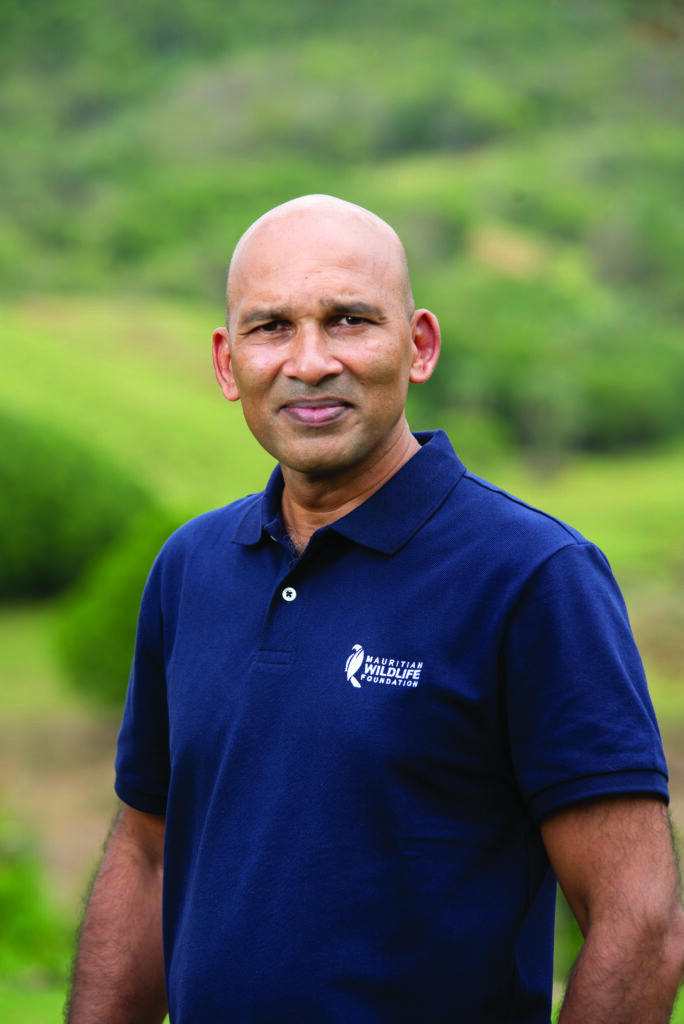
He took his first steps in Saint Pierre, then in the Zimbabwean bush, where he had followed his father, a schoolteacher. Catapulted into this rich and wild natural environment, Vikash Tatayah discovered a passion that would stay with him for life. From those seeds, sown so early in his journey, a veritable forest grew, culminating in July 2026 with his appointment as CEO of the Mauritian Wildlife Foundation (MWF). Eugénie Sauzier-de Rosnay
Back in Mauritius to finish high school, Vikash is a true jack-of-all-trades: public relations, archaeology, law… But his love for nature is stronger, and the aspiring agronomist embarks on a Bachelor of Science (Hons.) in agriculture while gaining experience at the Mauritius Sugarcane Industry Research Institute. His final thesis, devoted to tenrecs—a first!—led him to meet Carl Jones, a renowned biologist and one of the founders of the Mauritian Wildlife Foundation. After a stint at Food & Allied Industries Ltd, his path began to take shape for good.
“Back then, I was devouring books, publications, and scientific reports, and I took every opportunity to go into the forest and participate in studies,” he says. When word got out that Carl Jones was looking for someone to assist him, the choice was obvious. Although Vikash dedicated his doctoral dissertation to the Ronde Island petrel, his interests knew no bounds, and the conservation projects he undertook spanned a wide range—from the protection and restoration of flora and fauna in Mauritius, Rodrigues, and the islets. In 2000, he also spent time at Jersey Zoo in the United Kingdom and earned a degree in conservation, thereby reinforcing his ambition.
His greatest success? Île Ronde! What began as a project consisting of just a few tents and tarps has blossomed into a full-fledged research station that, thanks to hard work, has been able to implement a major conservation and restoration program—including the reintroduction of turtles to the island. “It’s a profession that never ceases to amaze me: we think we know it all, and yet, even today, we’re discovering new species,” he shares. Take, for example, the researchers who, this year, stumbled upon a previously unknown species of trap spider on the southeastern islets!
While the organization has achieved many successes, challenges remain. Among these, one of the most significant obstacles is administrative red tape, which causes various projects to drag on longer than necessary… A burden that could prove costly, given the alarming figures recorded so far. “We have already lost about thirty species of birds and roughly 10 percent of our endemic flora,” says Vikash. High-quality primary forest now covers only 1.3 percent of the territory, down from 2 percent twenty years ago. “Unfortunately, we can only sound the alarm. We are not against development, but we advocate for it to be carried out with respect for our natural heritage,” he adds. One of the major concerns at the moment is the route of the M4 highway, which risks encroaching on sensitive natural areas teeming with endemic life or on caves that are vital to biodiversity.
For now, the MWF’s new CEO plans to develop a strategic plan that examines the organization’s strengths, weaknesses, and priorities. In addition to actively seeking partnerships, numerous projects are taking shape: the restoration of the Coin de Mire, managing the impact of visitors to other islets, enhanced plant conservation, and insect research… “We also want our projects, such as Mondrain or Île aux Aigrettes, to become models that can be replicated on a larger scale and inspire individuals to restore their own environments,” he says. These are lofty ambitions—provided they are taken seriously…
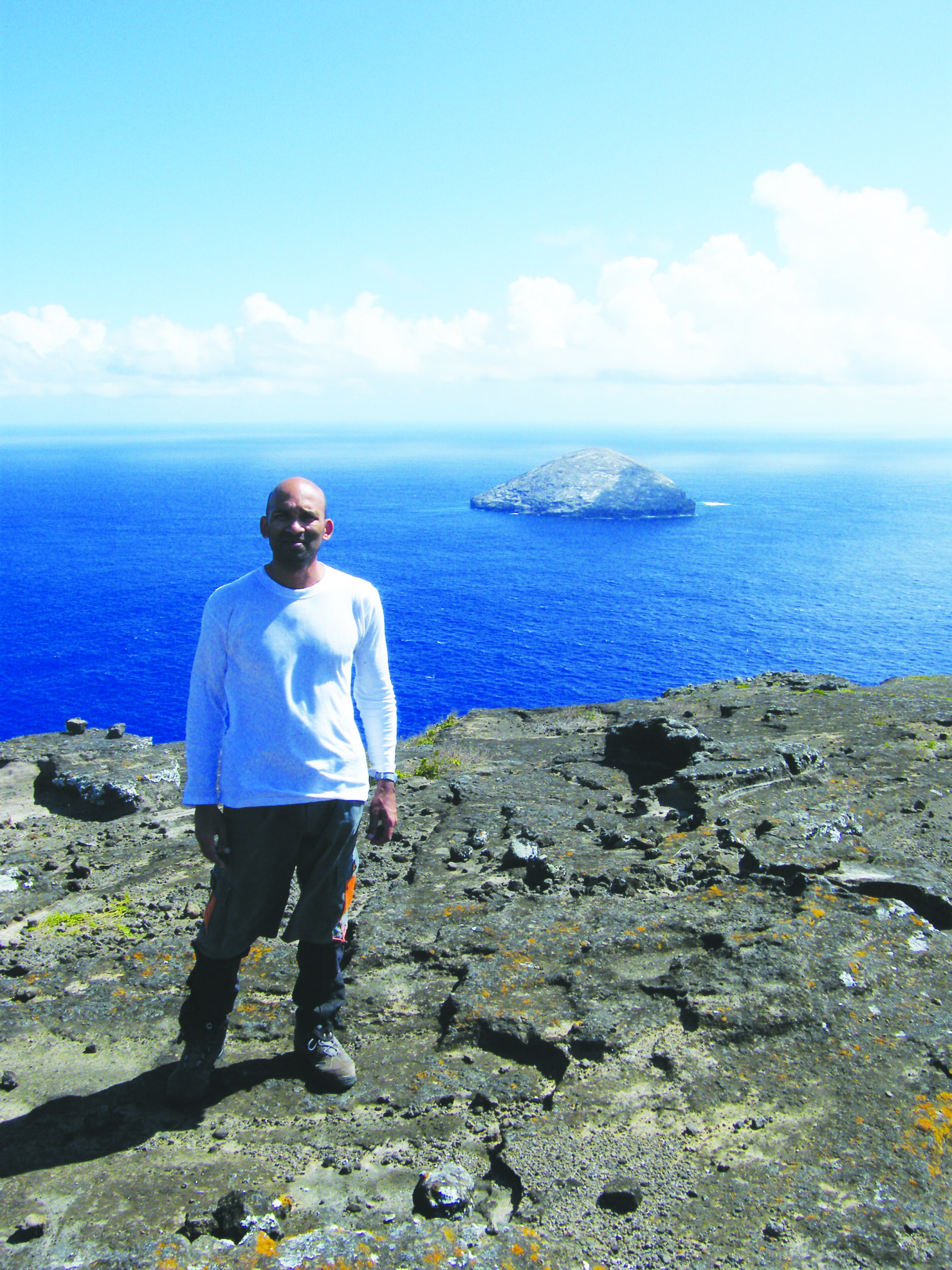

Guardian of the Living World
His first encounters with nature began in Saint Pierre before he moved to the Zimbabwean bush, where his father taught at a local school. Immersed in a wild landscape teeming with wildlife, Vikash Tatayah discovered a passion that would shape the course of his life, culminating in his appointment as CEO of the Mauritian Wildlife Foundation in July 2026.
Back in Mauritius to complete his secondary education, Vikash explored a wide range of interests, from public relations and archaeology to law. Yet nature ultimately won him over. Determined to become an agronomist, he pursued a Bachelor of Science (Hons.) in Agriculture while working at the Mauritius Sugarcane Industry Research Institute. His pioneering thesis on tenrecs led him to Carl Jones, the renowned conservation biologist and co-founder of the Mauritian Wildlife Foundation. After a brief stint at Food & Allied Industries Ltd, his career found its true direction.
“I devoured scientific books and papers, and took every opportunity to head into the forest and assist with field studies,” he recalls. When Jones began looking for an assistant, Vikash was the obvious choice. Although his doctoral research focused on the Round Island petrel, his work soon expanded to conservation projects across Mauritius, Rodrigues, and the offshore islets. An internship at Jersey Zoo in 2000, where he earned a diploma in conservation, further solidified his commitment to the field.
Among his proudest achievements is the transformation of Round Island from a modest field camp into a thriving conservation station, supporting ambitious restoration projects, including the reintroduction of giant tortoises. “This profession never ceases to amaze me. We think we know everything, yet we’re still discovering new species,” he says, pointing to the recent discovery of a previously unknown trapdoor spider on the southeastern islets.
Challenges remain. Bureaucratic delays continue to slow conservation projects, while biodiversity indicators paint a worrying picture. “We have already lost around 30 bird species and about 10% of our endemic flora,” Vikash notes. High-quality native forest now covers just 1.3% of Mauritius, compared with 2% two decades ago. Another concern is the proposed M4 highway, whose route could encroach on sensitive habitats rich in endemic wildlife and valuable cave ecosystems. “We are not against development, but it must go hand in hand with protecting our natural heritage.”
As the MWF’s new CEO, Vikash is focused on its long-term strategy and new conservation partnerships. From restoring the Coin de Mire to protecting native plants and insects, his vision is to create projects that can inspire broader environmental restoration across Mauritius—provided they receive the support they deserve.