
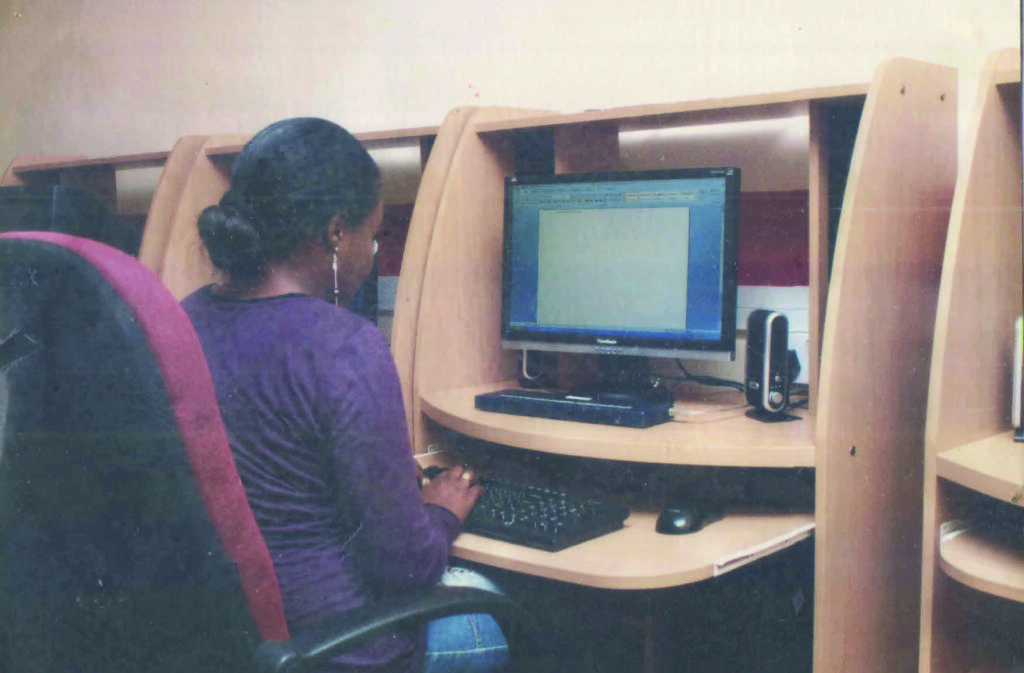
For 44 years, the NGO Lizie Dan La Main (LDLM) has been accompanying and supporting blind and partially-sighted people. Its mission: to improve their daily lives by providing assistance, support and autonomy. At a time when digital technology seems more than ever to be shaping our societies, the organization rides the wave of progress, striving to bridge the gaps. Eugénie Sauzier-de Rosnay
It all started with a common thread: in 1981, a group of visually impaired friends decided, under the leadership of Reynolds Permal, to form a music troupe to make their voices heard and share their difficulties – a fine initiative which, after a few concerts across the island, gave birth to the Lizie Dan La Main association. From these few comrades, the association has blossomed and today supports more than 15 children, a dozen teenagers and some forty adults.
In this ever-changing world, digital technology leaves no one behind and offers them a phenomenal opening. “Technology fosters autonomy, enabling everyone to live their lives to the full, in an inclusive society where all differences are respected and valued, and where our beneficiaries can flourish and actively participate in everyday life,” says Florianne Poché, director of the NGO.
The use of specialized software, such as ZoomText and JAWS, or smartphones equipped with text-to-speech functions, contributes to greater independence and confidence, enabling people to surf the Internet without the assistance of a third party, for example. These new resources are also essential to the employability of blind and partially-sighted people – a vital springboard to well-being.
“Working not only enables them to regain financial stability, but also to give meaning back to their lives,” she adds. The only obstacle: the high cost of specialized equipment. “Fortunately, a number of professionals in the IT sector support us, notably by volunteering their expertise and support – invaluable help that enables us to go further every day,” concludes Florianne.