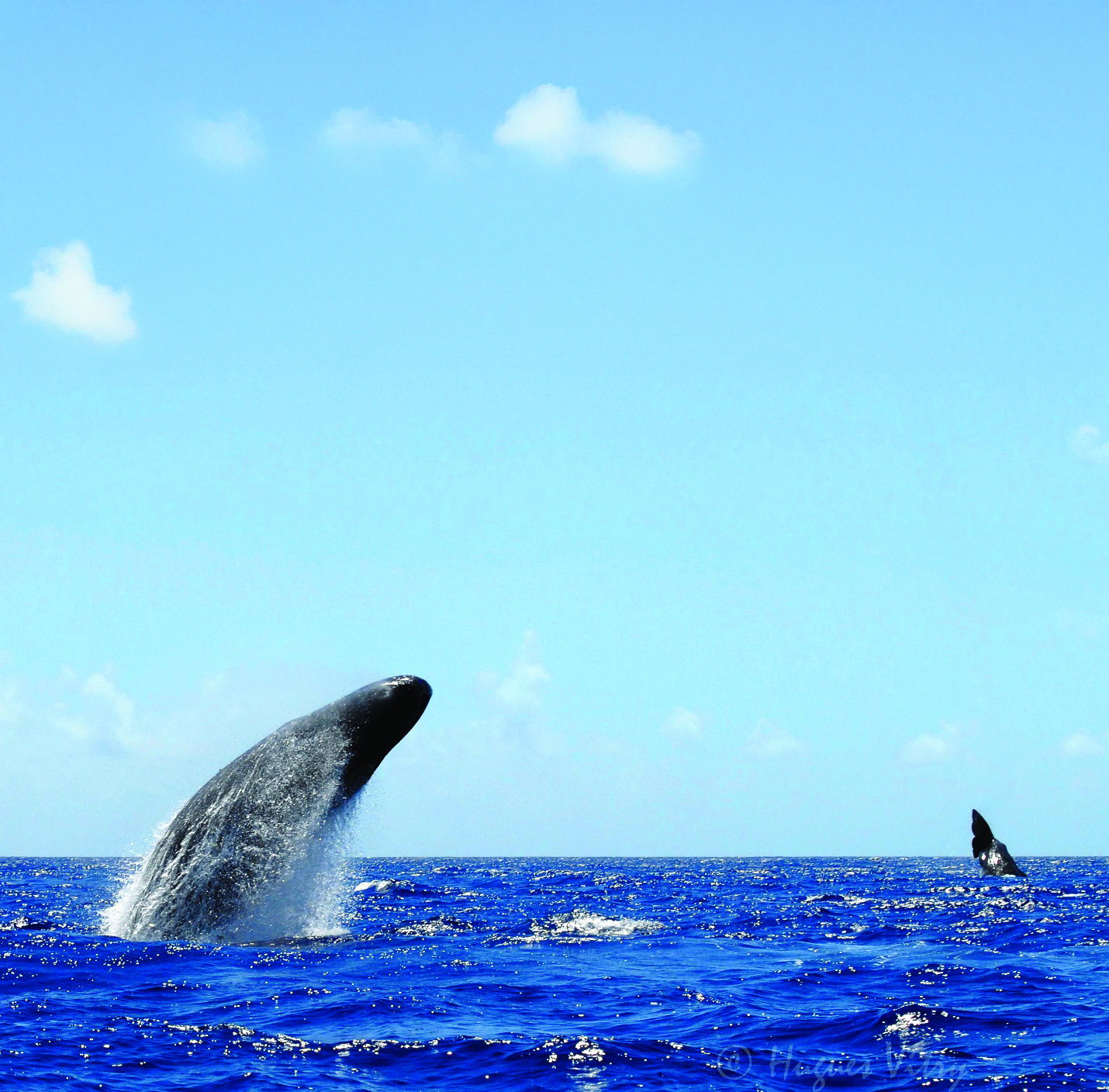
While containment may have been a blessing for the tranquillity of our great marine mammals, the aftermath is less rosy. The nautical-tourism business has taken off so well that marine observers have been sounding the alarm for several years about the state of health of the sperm whales that reside in our waters. Marine naturalist Hugues Vitry helps us to see things more clearly. Dominique Bellier
Swimming with sperm whales has become a fashionable activity not only for influencers or former champions in search of glory, but also for thrill-seeking tourists, to whom unscrupulous operators fail to point out that such swimming has been banned since 2012. Of course, swimming with sperm whales is much more profitable
Hugues Vitry, president of the Marine Megafauna Conservation Organisation (MMCO), has been observing sperm whales for eighteen years… so much so that his organisation has identified 200 individuals, of which 25 to 28 reside to the west of the Mauritian coast. Although he currently counts 25, this number should not be allowed to fall any further… Our interlocutor believes that there is more mortality among coastal residents than among migrants, who live in remote areas.
Several adult migratory corpses have reached our east and south coasts in recent years, some with broken spines leaving no doubt as to the accidental cause of death by collision with a ship… The body of a large migrant washed ashore in 2024, but the corpses of residents are moving offshore, pushed by the prevailing winds.
Hugues Vitry estimates that sperm whale calf mortality tripled between 2021 and 2025, with one calf whose head was sheared off by a boat propeller narrowly escaping death. Disturbed by human harassment, the mothers are constantly on the move. They tire, hunt less and less, and lose weight considerably. The agitation prevents them from breastfeeding. Our interlocutor notes more and more injuries to adults. In 2022 and 2023, the MMCO team witnessed the terrible agony of two appallingly thin females, while operators and brainwashed tourists enjoyed the show! Humans are regularly injured.
The Dolphin & Whale Watching Act of 2012 regulates these activities, but the penalties for illegal swimming are poorly enforced. NGOs and marine wildlife enthusiasts are urgently waiting for the judiciary to become more involved, and for the Act to be strengthened with stiffer penalties that would apply to crews, boat owners and customers who take to the water. Training and awareness campaigns are planned, as are additional resources for the National Coast Guard. To be continued…
Photo: ©Hugues Vitry (MMCO)