From exclusivity to inclusivity
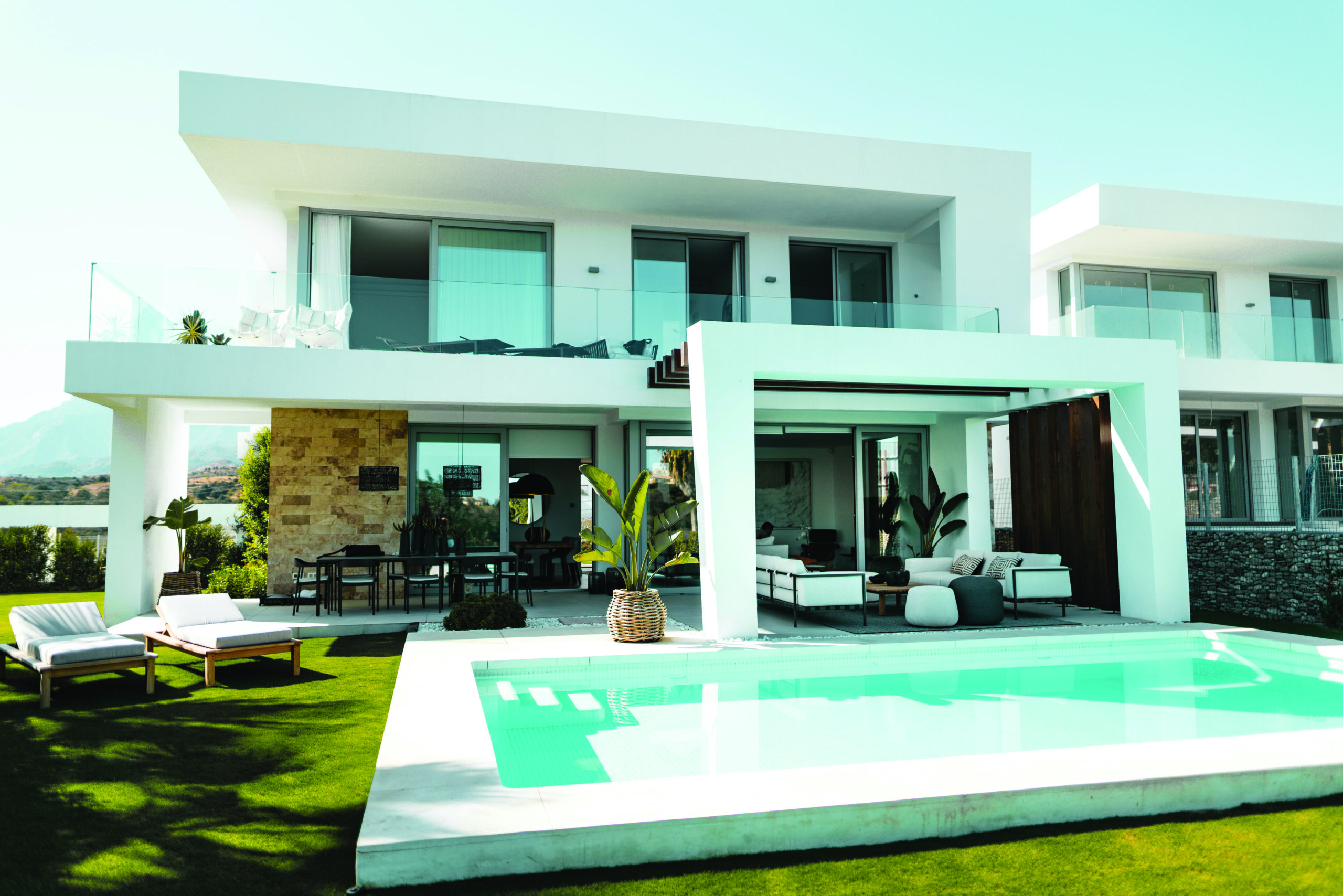
It was in the 1970s that Mauritius really put itself on the world map as a paradise destination of choice. As hotels began to spring up like mushrooms, over the decades the country moved away from this model of isolated developments to embrace the creation of truly integrated urban ecosystems – an intelligent transition, the outline of a connected and inclusive Mauritius. Eugénie Sauzier-de Rosnay
A dream that has matured
While the hotel industry remains one of the red threads running through Mauritius’s development history, real estate has become more nuanced in recent years. Isolated PDS, IRS and RES programs continue to flourish on the island, while some projects are part of an even more global and thoughtful approach. With the advent, in 2015, of the Smart City Scheme, new developments are seeing the light of day, designed to transform the country into a veritable hub of innovation and sustainability.
Centered around leisure, proximity to services and sustainability – in line with the famous “Live, Work, Play” concept – these smart cities offer a particularly pleasant, connected living environment, shaping living spaces that are autonomous and sustainable, with many advantages to boot, such as their accessibility to Mauritians and foreigners alike. Residential spaces, offices and workspaces, shops, educational and medical facilities, leisure and entertainment… It’s all there!
Each region has its own identity
Deliberate action or coincidence? Indeed, it’s almost poetic that each development seems to embody the identity of the region into which it is integrated. Mont Choisy Le Golf, with its luxury residential development and golf course – the only international championship course in the north of the island – and Beau Plan – a family, sports and business environment par excellence – highlight the dynamic, cosmopolitan face of the northern coast.
The peaceful, refined West is also taking shape under the impetus of Medine, which through its various developments is modeling a connected region, integrating communities to better grow and flourish. The Grove, the group’s first residential project, is a fine example of Medine’s committed values, whether through its thoughtful, sustainable construction methods or its inclusiveness.
In the center, it’s culture and nature! And Moka’s Smart City illustrates this well, for example through its Kocottes, former chicken coops transformed into studios and creative spaces for local artists, or the 13,000 trees planted to form small urban forests. Its latest innovation: Roulib, an initiative promoting soft mobility with a fleet of electric bicycles available to city residents and employees!
The authentic, unspoilt side of the East emerges through beautiful projects such as Anahita Beau Champ. With preserved natural spaces and an enhanced industrial heritage, the properties in this development are also inspired by the Mauritian houses of yesteryear, brilliantly embodying the raw essence of the region, while offering a complete, almost self-sufficient living environment.
New ways to develop
In addition to these smart cities, which help us to dream of the Mauritius of tomorrow, other projects are also being developed, on a smaller scale, to realize an equally bold vision. One example is Domaine d’Anbalaba, the very embodiment of the wild and picturesque soul of the South. The only IRS program in the country to be built entirely in a fishing village, it offers a glimpse of a Mauritius that is still resolutely authentic.
At the same time, even the most exclusive developments are adorned with a luminous aura: Beachcomber’s Harmonie Villas, located in the sumptuous, unspoilt setting of the West, are a luxury bubble where time seems to stand still. With sustainable, bioclimatic architecture, wetland restoration and management, and landscaping that favors the island’s endemic and indigenous species, this new project is a veritable ode to the natural beauty of Mauritius.
Real estate tax reform: what impact?
The Finance Bill 2025, presented by the Mauritian government as part of its draft budget for the 2025-2026 financial year, marks the starting point of a new real estate and residential strategy for Mauritius. Real estate investment consultant Tess d’Halluin looks back at this reform, which will mainly affect non-citizens. Eugénie Sauzier-de Rosnay
What are the key points of this reform?
The increase in the tax from 5% to 10% as of July 1ᵉʳ 2026: this reflects a strong desire to consolidate public finances and guarantee a sustainable framework for investors. Far from the brutal or confiscatory increases seen in other countries, this reform is announced in advance, offering visibility to players. For investors, this means greater stability over time, a signal of the seriousness of the Mauritian government, and a tax system that remains competitive with world standards.
How can non-citizens acquire property?
Unlike Mauritian citizens, non-citizens have to use regulated devices (PDS, RES, IRS, Smart City, etc.) that ensure greater traceability and legal certainty. These are not obstacles, but regulatory tools. They also play an essential role in preventing massive speculation, which would deprive Mauritians of the possibility of housing. By imposing controlled frameworks, the reform protects the local land heritage, agricultural land, and ensures that the local population is not excluded by an uncontrolled rise in prices. On condition, however, that landowners and developers adopt an equitable regulation between Mauritian projects and those intended for foreigners!
Are we already seeing price adjustments on the real estate market as a result of this reform?
Yes: the announcement of the tax hike is prompting many owners to anticipate selling before July 1ᵉʳ, 2026. This causes an increase in supply, a kind of emulation on the market, and in some cases a slight price drop. For investors, this creates a window of opportunity: premium, rare and well-positioned properties retain their value, while in other segments we find more favorable negotiating conditions.
What are today’s trends?
It’s a well-known fact that the real estate sector is constantly evolving. Offering an unbeatable living environment, Mauritius also boasts a particularly dynamic real estate market, attracting both local and foreign investors. How has Mauritian real estate evolved in recent months? The experts tell us. Eugénie Sauzier-de Rosnay
Strong preferences
According to data from LexpressProperty.com, property prices accessible only to Mauritians have risen appreciably in all regions of the island – by up to 46% in the North and 82% in the West! -except for apartments in the South. While the North and West remain the most popular regions for buying and renting, thanks to their dynamism and pleasant living environment, other fast-growing towns are also showing marked popularity: Albion, Curepipe and Beau Bassin for rentals; Pointe aux Sables, Vacoas and Beau Bassin for buying.
The portal’s data reveals a balanced interest between houses and apartments for rental, but a marked preference for houses for purchase (41% vs. 25% for apartments). For rentals, 40% of apartment searches are for 2-bedroom properties, and 45% of house requests are for 3-bedroom properties, followed by 4-bedroom properties (36%). When it comes to buying, 3-bedroom apartments dominate (45%), ahead of 2-bedrooms (40%), while houses are mainly 3-bedroom (38%) or 4-bedroom (32%).
A solid, sustainable market
Specializing in the analysis of real estate data, Market Trends meticulously studies sales recorded in Mauritius, as well as projects currently being marketed. To identify trends, the company takes two approaches. “Firstly, we carry out customized market studies: we generally analyze data from the last two to three years, in order to provide a clear and relevant vision tailored to the client’s problem,” says Alix Tennant, Director.
At the same time, certain key indicators – such as prices, types of buyers, most sought-after areas and property typology – are constantly analyzed and compared with those of previous years. It’s an arduous but fascinating task, which enables us to identify trends in an ever-changing market. According to Alix, the foreign market remains very dynamic from one year to the next – despite a slowdown in sales during the months of August and September 2025.
The main nationalities to invest in Mauritius: the French and South Africans! “However, foreign buyers will account for less than 10% of the volume of transactions recorded in 2024 and 2025. In terms of value, however, they represent almost 30% of the market”, she explains. Thus, in 2024, less than 5% of sales volume will involve properties under the PDS/IRS/RES regime. As for the new tax reform, Alix is optimistic: “while some investors may be held back by these measures, buyers who choose Mauritius for its quality of life, climate or stability will not be discouraged”.
According to the data collected, the local market appears to be more volatile. “The market ran out of steam in 2024. After a solid start to 2025, a further slowdown is evident, following the end of the Home Ownership Scheme in July”, she adds. However, this situation is not preventing prices from rising across all segments (land and built-up residential).
“The resilience of the land segment continues to surprise, despite rising prices: this shows the extent to which it remains a safe haven for Mauritians, perceived as a form of asset security and a long-term investment opportunity,” she points out. And one of the notable trends of 2025: a perceptible drop in sales recorded for new-build property, which this year represents only a quarter of all transactions on the local market!
Happy days for real estate
Since the real estate market is particularly lively, it also comes with its share of challenges. “Today, the main challenge remains to accompany our customers in a constantly changing context: changes in taxation, new regulations, rising construction costs…”, confides Sophie Hardy, director of the Villa Vie agency, recently voted Best Independent Luxury Real Estate Agency in Mauritius.
“Added to this is the requirement to maintain a quality offering, as buyers are looking for durable goods aligned with their lifestyles,” she continues. A trend that really came to the fore after the COVID-19 pandemic! “Today’s buyers attach greater importance to volume and day-to-day well-being: housing has become a real place for long-term living, more than just a roof over one’s head”, she asserts.
Sophie remains serene about the months ahead: in her view, the key is Mauritius’ ability to preserve its environment and its art of living. While demand from Mauritians remains solid, she is not worried about foreign investors. “The Mauritian tax system is still a considerable advantage for them: no property tax, no inheritance tax, no capital gains tax…”, she says. The promise of a setting that is not only attractive, but also extremely serene!
Towards an efficient, innovative industry
In recent years, the construction industry has undergone perceptible upheavals. Mainly an importer, the island also saw the emergence, in the 90s, of the impetus for quality local production. Marked by innovation, new techniques and mentalities are now emerging, inking the features of a resolutely modern country. Eugénie Sauzier-de Rosnay
The construction sector seems to be at a turning point, heralding the arrival of good times tinged with innovation, but also with respect for the market. For Amaury d’Unienville, General Manager – Head of Commercial R&D at Saint-Gobain Indian Ocean, the COVID-19 pandemic and the chain of global geopolitical instability have played a role in this change, underlining the industry’s resilience to global crises. “It reminded us that we need to rediscover our identity as industrialists, to become exporters again, and therefore producers”, he explains.
A successful gamble for the company, which already manufactures a number of products specially formulated to meet the needs of the market – and in particular the specific climatic conditions of the region – and exported to the Indian Ocean region. For the light construction professional, there’s no doubt: a profound transformation is taking place in Mauritius. At the top of the list: the quest for greater comfort, reduced impact and greater productivity and efficiency.
“With a greater openness to the world, our sector is fortunately modernizing,” he says. Lightweight partitions, high-performance glass and thermal insulation, for example, seem to be slowly entering the mainstream… For Amaury, the biggest challenge today remains the lack of qualified manpower. And yet… This situation, which in his view is not only negative, augurs well for a youth in search of skills, which absolutely must be trained.
“The more we modernize our industry, the more attractive it becomes to the next generation. Tomorrow’s battle will be about productivity, not the number of hands,” he confides. The solution is simple: move with the times. From the integration of artificial intelligence to the mechanization and automation of operations, tomorrow’s industry promises to be exciting!
Kolos Slag Cement: building greener, more sustainably
For 25 years, Kolos Cement has supported the development of Mauritius by offering quality cements that combine performance and innovation. Today, the company is taking another step towards sustainability with the launch of Kolos Slag Cement, a new-generation cement designed to reduce the sector’s carbon footprint.
Formulated from an optimized blend of clinker and upgraded mineral additions, this low-carbon cement boasts a significant reduction in CO₂ emissions while guaranteeing enhanced strength and durability, particularly in coastal and wet environments. Compliant with European standard EN 197-1, it is the ideal choice for modern, responsible construction sites.
“Kolos Slag Cement embodies our vision of a more sustainable future for Mauritian construction,” says Sean André, Head of Sales & Marketing at Kolos. With this innovation, Kolos confirms its role as a pioneer of a greener future for building and infrastructure in Mauritius.
Real estate: shaping tomorrow
From Exclusivity to Inclusivity
Mauritius truly established itself on the world map as a premier paradise destination in the 1970s. Whilst hotels began sprouting up across the island, the country gradually shifted away from isolated resort developments towards creating integrated urban ecosystems-a clever transition, sketching out a connected and inclusive Mauritius.
A Vision That Has Matured
Whilst the hospitality industry remains a defining thread in Mauritius’s development history, the property sector has grown increasingly sophisticated in recent years. Stand-alone PDS, IRS and RES schemes continue to flourish, whilst certain projects embrace an even more comprehensive and considered approach. With the introduction of the Smart City Scheme in 2015, new developments have emerged, designed to transform the country into a hub for innovation and sustainability.
Built around leisure, service proximity and sustainability-following the renowned ‘Live, Work, Play’ concept-these smart cities offer a connected and exceptionally pleasant living environment, shaping vibrant, self-sufficient and sustainable spaces. They also bring numerous advantages, including accessibility to both Mauritians and foreigners alike. Residential areas, offices and workspaces, shops, educational and medical facilities, leisure and entertainment… everything is there!
To Each Region Its Own Character
By design or by chance? Indeed, it’s almost poetic how each development seems to embody the identity of its region. Mont Choisy Le Golf, with its luxury residential scheme and golf course-the only international championship course in the north of the island-alongside Beau Plan-a family-friendly, sporting and professional environment par excellence-showcase the dynamic and cosmopolitan face of the northern coast.
The peaceful and refined West also takes shape under Medine’s stewardship, which crafts through its various developments a connected region, bringing communities together to grow and thrive. The Grove, the group’s first residential built project, perfectly reflects Medine’s committed values through its thoughtful and sustainable construction methods as well as its inclusive approach.
In the center, it’s all about culture and nature! Moka Smart City illustrates this beautifully, for instance through its Kocottes-former chicken coops transformed into studios and creative spaces for local artists-or the approximately 13,000 trees planted to create small urban forests. Its latest innovation: Roulib, an initiative promoting soft mobility with a fleet of electric bicycles available to the city’s residents and employees!
The authentic and unspoilt character of the East emerges through attractive projects such as Anahita Beau Champ. With preserved natural spaces and enhanced industrial heritage, the properties in this development draw inspiration from traditional Mauritian houses, brilliantly capturing the raw essence of the region whilst offering a comprehensive and nearly self-sufficient living environment.
New Approaches to Development
Beyond these smart cities that allow us to envision tomorrow’s Mauritius, other projects are taking shape, materializing an equally bold vision on a smaller scale. Take Domaine d’Anbalaba, the very embodiment of the South’s wild and picturesque soul: as the country’s only IRS scheme fully embedded within a fishing village, it offers a glimpse of a resolutely authentic Mauritius.
Meanwhile, even the more exclusive developments are adopting a brighter outlook: Beachcomber’s Villas Harmonie, set in the magnificent and pristine West, create a luxury haven where time appears to stand still. With sustainable bioclimatic architecture, wetland restoration and management, and landscaping that prioritises the island’s endemic and indigenous species, this new project stands as a true tribute to Mauritius’s natural beauty.
Property Tax Reform: What Impact?
The Finance Bill 2025, presented by the Mauritian government as part of its budget proposals for the 2025-2026 financial year, marks the beginning of a new property and residential strategy for Mauritius. Tess d’Halluin, a property investment consultant, discusses this reform which will primarily affect non-citizens.
What are the key points to take away from this reform?
The increase in tax from 5% to 10% taking effect from 1st July 2026: this reflects a strong commitment to consolidating public finances and ensuring a sustainable framework for investors. Far from the sudden or punitive increases seen in other countries, this reform has been announced well in advance, providing clarity for stakeholders. For investors, this translates into greater long-term stability, a signal of seriousness from the Mauritian government, and a tax regime that remains competitive by global standards.
How can non-citizens acquire properties?
Unlike Mauritian citizens, a non-citizen must use regulated schemes (PDS, RES, IRS, Smart City, etc.) which provide enhanced traceability and legal security. These aren’t obstacles, but rather regulatory tools. They also play a crucial role in preventing widespread speculation that would deprive Mauritians of housing opportunities. By imposing controlled frameworks, the reform protects local land assets, agricultural land, and ensures the local population isn’t priced out by an uncontrolled surge in prices. Provided, however, that owners and developers maintain fair regulation between Mauritian projects and those intended for foreigners!
Are we already seeing price adjustments in the property market following this reform?
Yes: the announcement of the tax increase is prompting many owners to bring forward sales before 1st July 2026. This is causing an increase in supply, creating a certain buzz in the market, and in some cases a slight drop in prices. For investors, this creates a window of opportunity: premium properties that are rare and well-located are holding their value, whilst in other segments we’re seeing more favourable negotiating conditions.
What is Happening in Today’s Market?
The property sector never stands still, and Mauritius is no exception. Renowned for its exceptional quality of life, the island’s property market has been buzzing with activity, drawing keen interest from both domestic and international buyers. So what has been shifting in recent months? We asked the experts.
Buyer Preferences Taking Shape
Recent figures from LexpressProperty.com show that property values in the local market have climbed significantly across the island-with increases reaching 46% in the North and a remarkable 82% in the West-though flats in the South have bucked this trend. Whilst the North and West continue to dominate as the most desirable locations, several emerging hotspots are gaining traction: Albion, Curepipe, and Beau Bassin are proving popular with renters, whilst Pointe aux Sables, Vacoas, and Beau Bassin are attracting buyers.
The portal’s statistics reveal an even split between houses and flats in the rental market, but when it comes to purchasing, houses are the clear winner (41% compared with just 25% for flats). On the rental front, 40% of those searching for flats want two-bedroom properties, whereas 45% of house hunters seek three bedrooms. For purchases, three-bedroom flats lead the way at 45%, whilst buyers seeking houses primarily want either three bedrooms (38%) or four bedrooms (32%).
A Resilient Market
Market Trends, a specialist in property data analysis, carefully tracks both completed sales and developments currently on the market. The firm typically analyses two to three years’ data to provide clients with precise, relevant insights tailored to their needs, explains Director Alix Tennant.
Crucial metrics-pricing, buyer demographics, popular locations, property types…-are continuously monitored to pinpoint month-by-month trends in this fast-moving market. According to Alix, the international market has remained consistently buoyant year after year, though there was a notable dip in sales during August and September 2025.
Who is investing? Predominantly French and South African buyers. ‘Foreign purchasers make up less than 10% of transaction volumes in 2024 and 2025, yet they account for nearly 30% of the market by value,’ she notes. In 2024, properties sold under PDS/IRS/RES schemes represented fewer than 5% of total sales by volume. As for the recent tax reforms, Alix remains upbeat: ‘Whilst some investors might be put off, those who choose Mauritius for its lifestyle, climate, or stability won’t be swayed.’
The domestic market appears more unpredictable. ‘It lost some steam in 2024. Following a strong beginning to 2025, we are now seeing another slowdown, largely due to the Home Ownership Scheme ending in July,’ she observes. Nevertheless, prices have continued rising across all categories.
‘The land segment’s resilience is quite striking, despite price increases-it remains a safe bet for Mauritians, seen as a secure asset and long-term investment,’ she emphasises. Another notable 2025 trend: a noticeable decline in new-build sales, which now represent just a quarter of local market transactions.
A Promising Outlook
With such a lively market naturally come challenges. Our main priority is guiding clients through constant change: tax adjustments, new legislation, escalating construction costs…’ confides Sophie Hardy, Director of Villa Vie estate agency, recently crowned Best Independent Luxury Estate Agency in Mauritius.
We must also maintain high standards, as buyers increasingly want sustainable properties that fit their lifestyle,’ she adds-a trend that really took hold post-pandemic. People now prioritise space and everyday comfort: the home has evolved into a genuine living environment, not just shelter.
Sophie feels confident about the future: what truly matters is Mauritius preserving its environment and way of life. With solid local demand and attractive tax benefits for foreign investors-no property tax, inheritance tax, or capital gains tax-the framework remains both appealing and reassuring!
Towards an efficient and innovative industry
The construction industry has been undergoing noticeable changes in recent years. Reliant mainly on imports, the island started to see the emergence of quality local production around the 1990s. Today, driven by innovation, new techniques and mindsets are taking shape, painting the picture of a resolutely modern nation.
The construction sector appears to be at a turning point, heralding the arrival of better days marked by innovation and a more responsive approach to market needs. According to Amaury d’Unienville, General Manager – Head of Commercial R&D at Saint-Gobain Océan Indien, the COVID-19 pandemic and subsequent global geopolitical instability have played a role in this shift, highlighting the industry’s resilience in the face of worldwide crises. It reminded us that we need to reclaim our identity as manufacturers, to become exporters and therefore producers once again,’ he explains.
The company has succeeded in this endeavour, already manufacturing numerous products specially formulated to meet market demands – particularly the region’s climatic specificities – and exported across the Indian Ocean region. For this lightweight construction professional, there is no doubt: a profound transformation is taking place in Mauritius. Top priorities include greater comfort, reduced environmental impact, and enhanced productivity and efficiency.
‘With greater openness to the world, our sector is fortunately modernising,’ he says. Lightweight partitions, high-performance glass and thermal insulation, for instance, seem to be gradually gaining acceptance… For Amaury, the biggest challenge today remains the shortage of skilled labour. Yet this situation, which he believes isn’t entirely negative, points to a younger generation seeking skills that must absolutely be developed.
The more we modernise our sector, the more attractive we make it to the new generation. Tomorrow’s battle will be about productivity, not manpower,’ he confides. The solution is therefore straightforward: move with the times. Integration of artificial intelligence, mechanisation and automation of operations: tomorrow’s industry promises to be exciting!
Kolos Slag Cement: building greener, building stronger
For 25 years, Kolos Cement has supported Mauritius’s development by delivering quality cement products that combine performance with innovation. Now, the company is taking a major step towards sustainability with the launch of Kolos Slag Cement-a next-generation cement designed to reduce the sector’s carbon footprint.
Formulated using an optimised blend of clinker and recovered mineral additives, this low-carbon cement achieves a substantial reduction in CO₂ emissions whilst delivering enhanced strength and durability, particularly in coastal and humid environments. Meeting the European standard EN 197-1, it is the ideal choice for modern, responsible construction projects.
Kolos Slag Cement embodies our vision for a more sustainable future in Mauritian construction,’ says Sean André, Head of Sales & Marketing at Kolos. With this innovation, Kolos reaffirms its position as a pioneer in creating a greener future for Mauritius’s building and infrastructure sectors.