
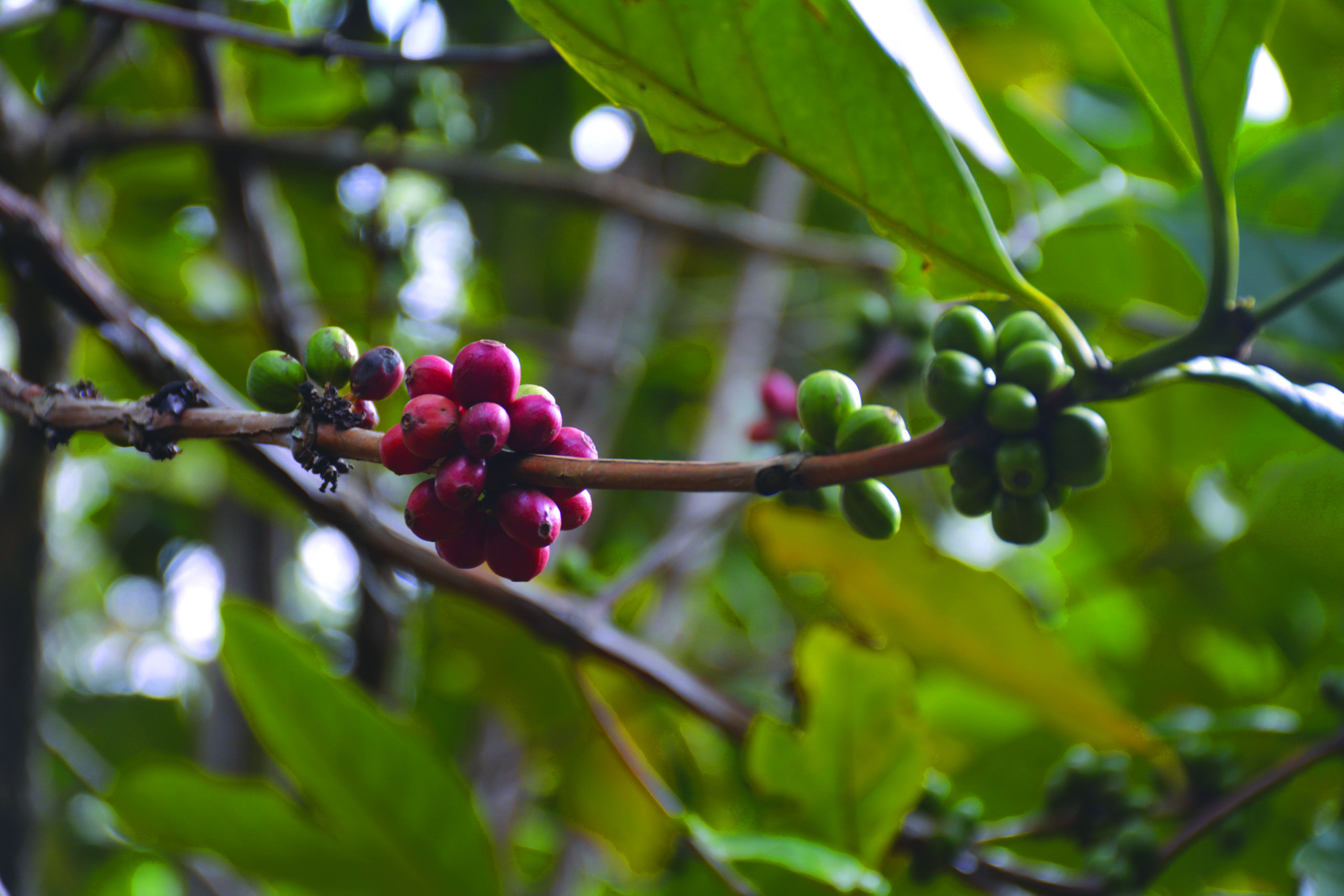
Reach the heights of Chamarel to immerse yourself in the freshness of the landscape.îof the forest and discover coffee-growing is a must. must The Coffee Tour Experience: a one- to two-hour stroll that’s as enjoyable as it is instructive. The Coffee Tour Experience guides explain the life cycles of coffee trees and the art of transforming scarlet cherries into aromatic black powder. Dominique Bellier
In this land of milk and honey, cocoa pods , coffee cherries and vanilla thrive in the company of banana trees, which enrich the soil, and large, century-old trees. The Chamarel coffee plantation covers 12 hectares, producing 3 to 5 tons of coffee a year. In addition to the traditional Arabica, a lesser-known species flourishes here under the name of Liberica, originally from Liberia, and grown mainly in Indonesia.
For a while,” explains our guide Warren Babet, “we thought it was a robusta, but our expert roaster, Thomas Lehoux, has identified it as a species in its own right: Coffea liberica, which accounts for 2% of production. It develops floral, fruity and slightly smoky aromas. The visit began with the hulling of a ripe cherry, where we tasted the sweet film and the mucilage that surrounds the bean…
The Chamarel plantation offers an exceptional microclimate for its coffees, usually grown at higher altitudes. The first coffee plants were introduced to Mauritius during the French period, in 1715, by the East India Company. But production was revived in 1961, when Bel Ombre Sugar Company took over the Chamarel and Case Noyale estates. The drying and roasting plant was set up in Case Noyale in 1967, and the first Arabica cherries were harvested in 1970…
The Scent of a Coffee Blossom
Reaching the heights of Chamarel to immerse yourself in the verdant freshness of the forest and discover coffee cultivation is a must: a one to two-hour walk that is as enjoyable as it is enlightening. The guides on this Coffee Tour Experience share the life cycles of coffee trees and the art of transforming scarlet cherries into aromatic black powder.
In this land of plenty, cocoa pods, coffee cherries and vanilla thrive happily alongside banana trees that enrich the soil and towering century-old trees. The Chamarel coffee plantation spans 12 hectares, yielding 3 to 5 tonnes annually. Besides the traditional Arabica, a lesser-known species flourishes here under the name Liberica, originally from Liberia and cultivated primarily in Indonesia.
‘For a time,’ our guide Warren Babet explains, ‘we believed it was Robusta, but our expert roaster, Thomas Lehoux, identified it as a species in its own right: Coffea liberica, which accounts for 2% of production. It develops floral and fruity aromas with a slightly smoky note’. The visit began with peeling a ripe cherry, tasting its sweet skin and the mucilage surrounding the bean…
The Chamarel plantation offers an exceptional microclimate for its coffees, which are typically grown at higher altitudes. The first coffee plants were introduced to Mauritius during the French period, in 1715, by the French East India Company. But production was revived from 1961 onwards, when the Bel Ombre Sugar Company took over the Chamarel and Case Noyale estates. The drying and roasting facility was established at Case Noyale in 1967, and the first Arabica cherries were harvested in 1970…