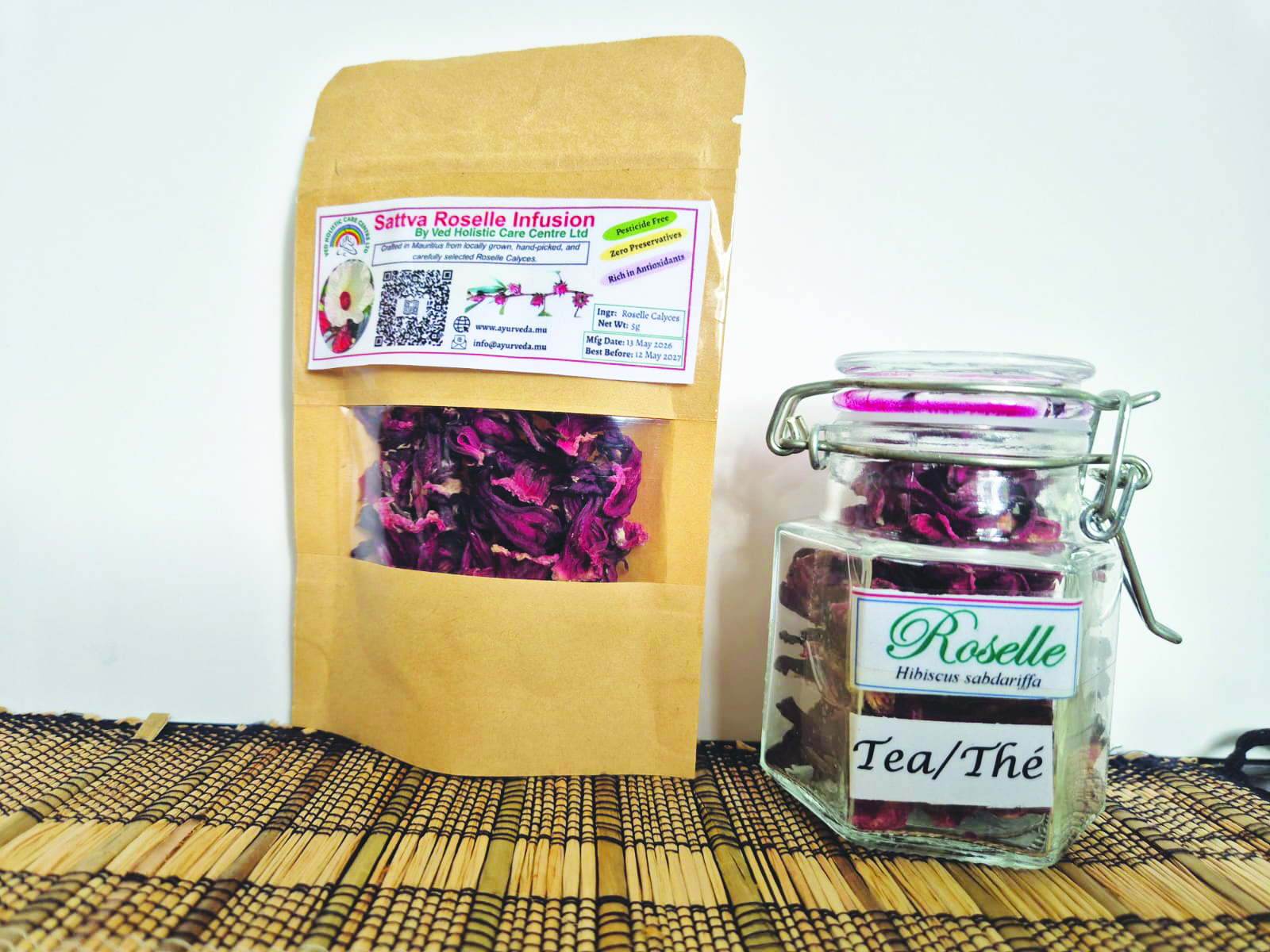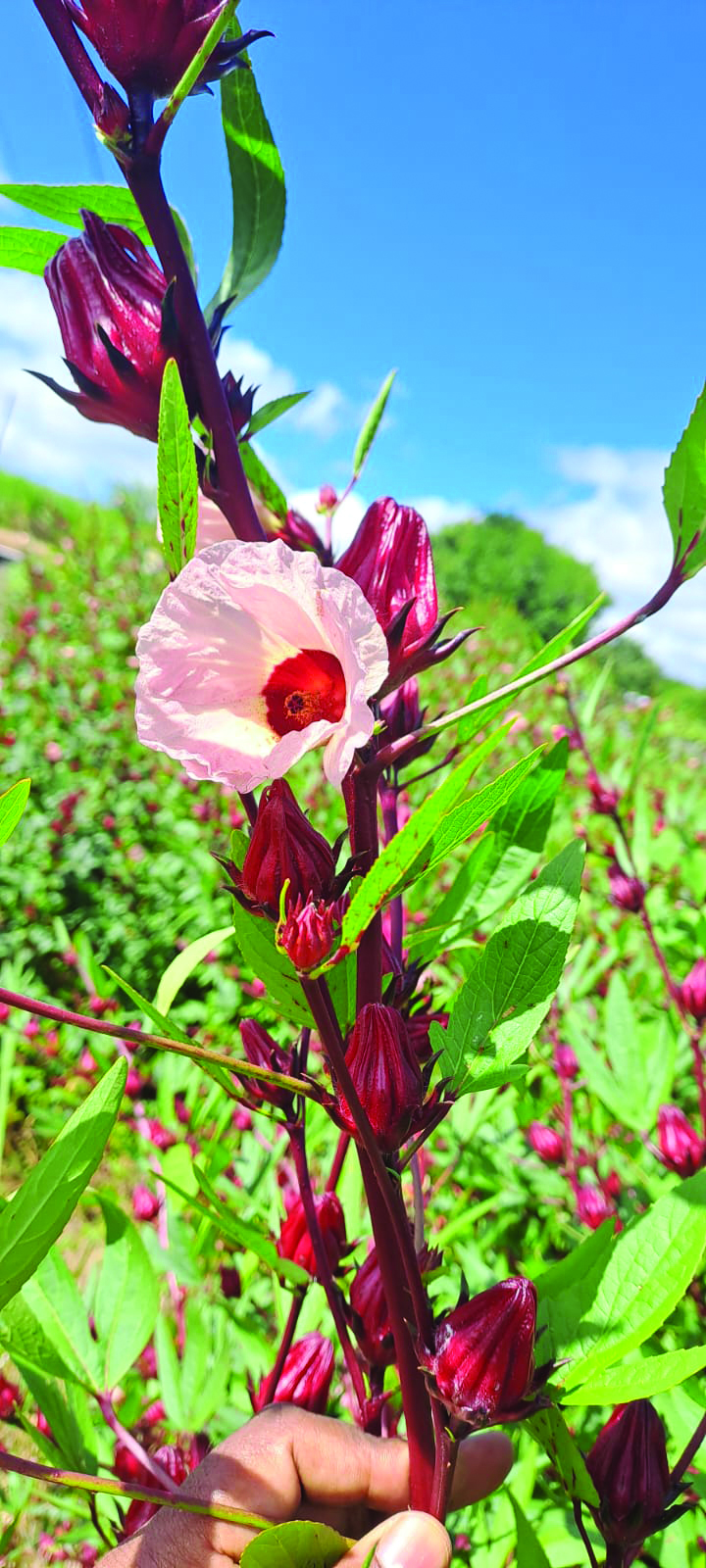

Three years ago, the Beedasy family began growing roselle on small farm plots in Épinay and Montagne Longue. Their production system, which respects the raw material, allows them to make herbal teas, sorbets, and jams with a particularly rich flavor. Dominique Bellier
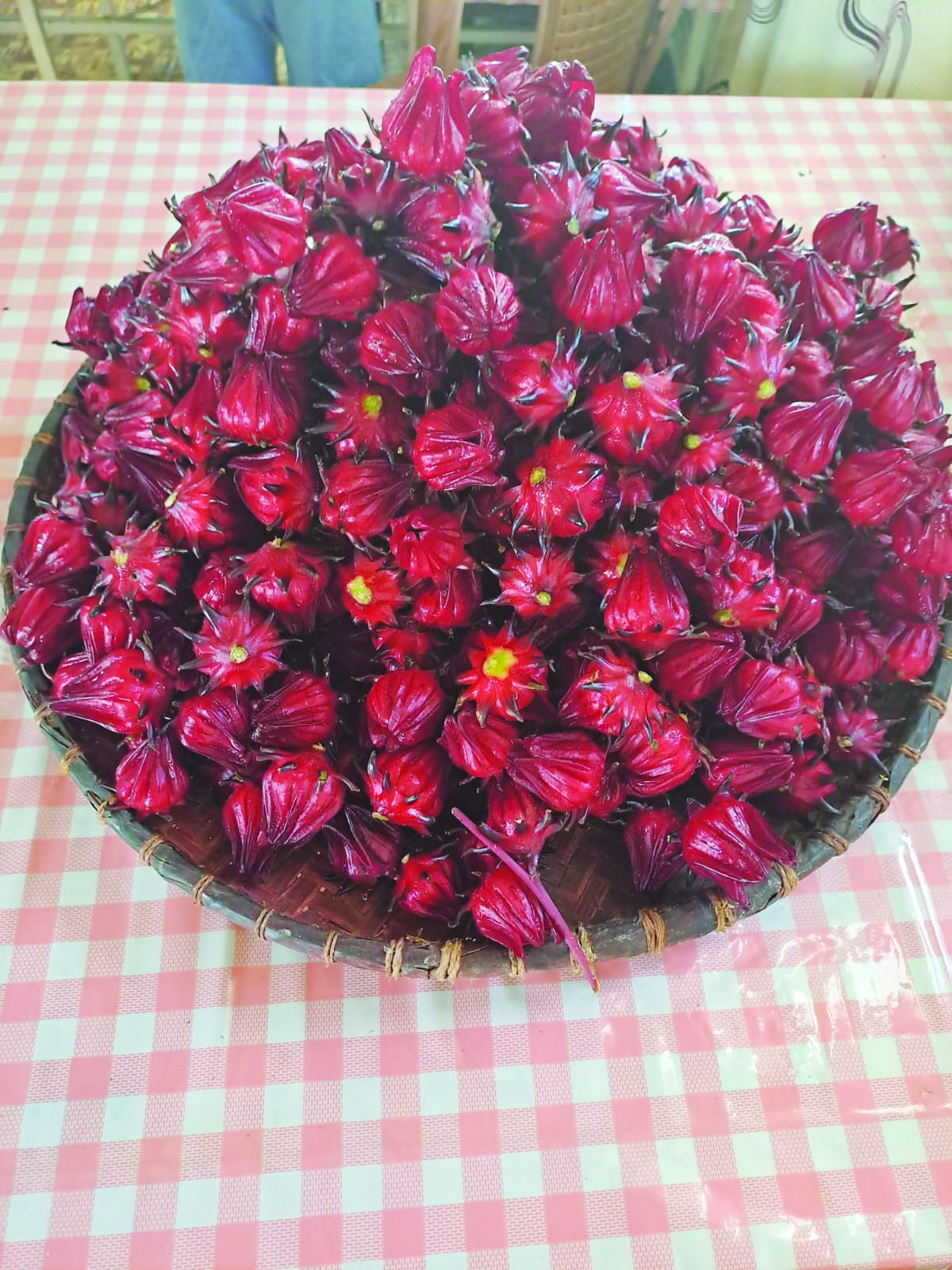
Every year, several hundred roselle seedlings are transplanted in December to take advantage of the rainy season. The methods used are based on rigorous and sustainable land management, in which the soil is covered with vetiver mulch to prevent weeds from spreading. No chemical inputs are permitted; the soil is enriched solely with compost and decomposed manure. When the plants bloom in late April, careful manual maintenance is performed to remove diseased leaves and branches. Pests are repelled using natural remedies, such as sprays of soapy water or neem oil, an excellent plant-based biocide. The harvest of the calyxes produced by the flower takes place over approximately nine weeks starting in May.
During this period, any treatment—even natural ones—is prohibited, and damaged calyxes are systematically discarded. Orchard maintenance is carried out year-round, with seasonal workers hired for planting and harvesting. Artisanal herbal teas, sorbets, jams, and syrups are then made at home in small batches. Tests conducted by the Ministry of Agriculture ensure the absence of chemical residues—an essential requirement for a food product that delivers on its nutritional promises. A special drying system has been developed to gently dehydrate the calyxes used in herbal teas. This preserves their antioxidant and anti-inflammatory properties, as well as their beneficial effects on regulating blood pressure and blood lipid levels.